

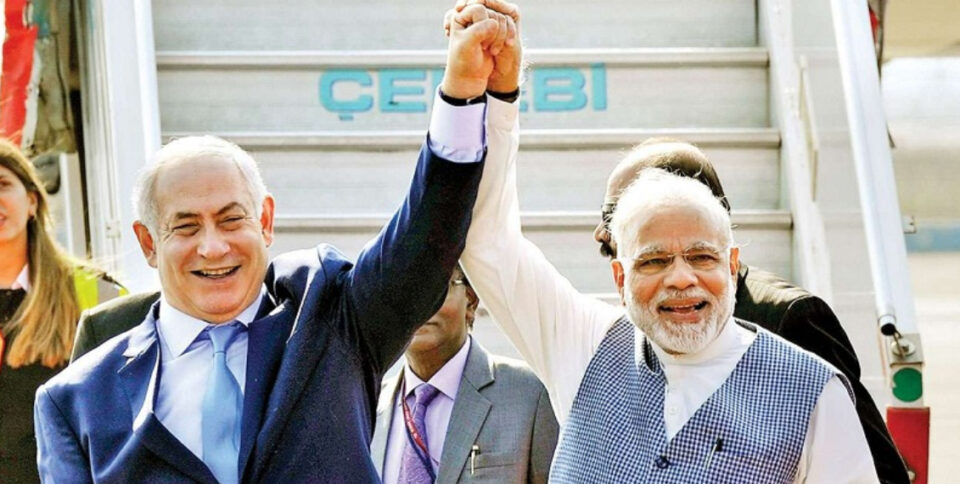
According to Israel’s national broadcaster Kan, Ohana made the remark after opposition leaders threatened to stay away from Modi’s speech unless the Chief Justice of Israel’s Supreme Court is formally invited, citing established parliamentary protocol.
The issue surfaced during a meeting where Meirav Ben-Ari of the centrist opposition party Yesh Atid challenged the Speaker over the arrangements.
Diplomatic Visit Caught in Domestic Crossfire
Prime Minister Modi’s address to the Knesset was expected to symbolise the deepening strategic and diplomatic partnership between India and Israel — two countries that have significantly expanded cooperation in defence, technology, agriculture and cybersecurity over the past decade.
However, the visit has become entangled in Israel’s ongoing domestic political tensions, particularly surrounding the role and authority of the judiciary. The opposition’s demand that the Supreme Court chief be invited to the address reflects broader disputes over protocol and the institutional balance between the executive and judiciary in Israel.
Speaker Ohana’s reported statement signals the ruling coalition’s determination to proceed with the event without conceding to opposition demands. Filling vacant seats with former lawmakers, if carried out, would be an unusual parliamentary move and underscores the intensity of political divisions.
Significance for India-Israel Relations
For India, Modi’s address to the Knesset carries symbolic and strategic weight. His 2017 visit marked the first-ever standalone visit by an Indian Prime Minister to Israel, redefining bilateral ties that were once kept low-profile due to regional sensitivities.
Over the years, India and Israel have built a robust defence partnership, with Israel emerging as one of India’s top arms suppliers. Collaboration has also expanded into innovation, water management, agriculture technology and counter-terrorism cooperation.
A boycott by Israeli opposition lawmakers, if it materialises, would primarily reflect Israel’s internal political contestations rather than any shift in bilateral relations. Analysts note that India maintains working relationships across Israel’s political spectrum.
Broader Political Context
Israel’s political landscape has been sharply polarised in recent years, especially over judicial reforms and questions regarding the authority of the Supreme Court. The controversy surrounding Modi’s address is seen by observers as another flashpoint in the larger institutional debate.
While it remains unclear whether the opposition will follow through on its boycott threat, Speaker Ohana’s stance suggests that the government intends to ensure a full house — even if symbolically — for the Indian leader’s speech.
As Modi prepares to address Israeli lawmakers, the episode highlights how international diplomacy can sometimes become intertwined with domestic political battles — even between longstanding strategic partners like India and Israel.