

Bangladesh July Uprising: Students Against Discrimination (SAD) on Tuesday filed a formal complaint with the International Crimes Tribunal (ICT) against 25 named business leaders and around 200 unidentified businessmen, accusing them of facilitating mass killings during the July 2024 uprising.
A delegation of SAD leaders submitted the complaint to the office of the ICT chief prosecutor, urging an investigation and legal action against those allegedly involved.
Speaking to reporters at the ICT premises after lodging the complaint, SAD President Rifat Rashid said that Salman F Rahman—former adviser to deposed prime minister Sheikh Hasina—was among the businessmen named. He, however, declined to disclose the identities of the other accused.
According to the complaint, the businessmen participated in a meeting with Sheikh Hasina on July 22, 2024, at a time when the country was under an internet shutdown amid escalating protests. The meeting was allegedly convened under the leadership of Salman F Rahman.
The complaint claims that during the meeting, the businessmen assured the then government of their support and pledged assistance in suppressing the student-led movement.
ICT Prosecutor Gazi Monawar Hossain Tamim confirmed receipt of the complaint.
“The complaint names 25 individuals and around 200 unidentified persons. It includes photographs of the July 22 meeting, video statements made during the meeting, and reports published in several newspapers,” he said.
Backgrounder: July 2024 Uprising and the ICT Complaint
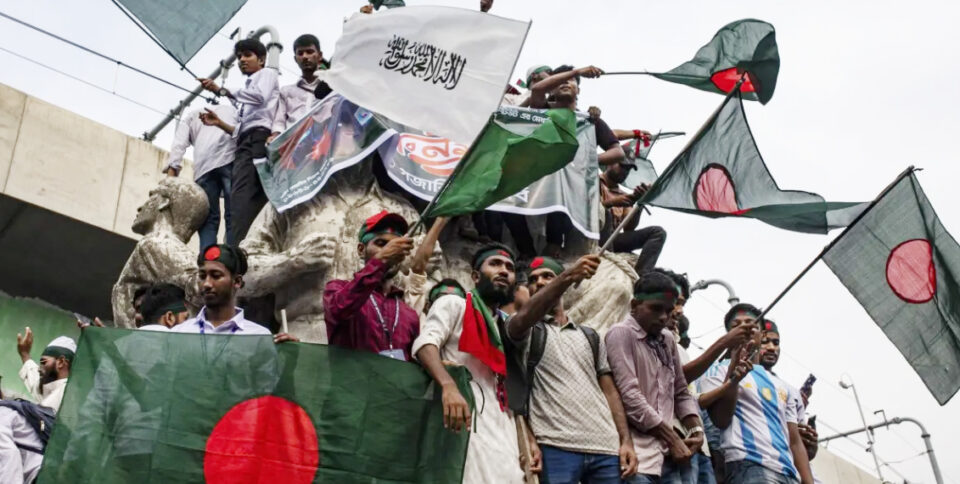
The July 2024 uprising marked one of the most intense periods of political unrest in Bangladesh in recent years, triggered by widespread student-led protests against government policies and allegations of authoritarian rule under then prime minister Sheikh Hasina.
What began as demonstrations over governance and civil liberties quickly escalated after security forces launched a nationwide crackdown. Human rights groups, opposition parties and student organisations alleged excessive use of force, including live ammunition, mass arrests and enforced disappearances. The government at the time denied wrongdoing, saying security agencies acted to restore order.
During the height of the unrest, the government imposed an internet shutdown across large parts of the country, citing security concerns. The move drew sharp criticism domestically and internationally, with rights groups arguing that it curtailed freedom of expression and obstructed documentation of abuses.
Students Against Discrimination (SAD), a prominent student-led platform that emerged during the protests, has since accused influential political and business figures of enabling the crackdown. According to SAD, a meeting held on July 22, 2024, between senior government leaders and prominent businessmen played a key role in mobilising support for suppressing the movement.
The complaint filed with the International Crimes Tribunal (ICT) alleges that certain business leaders provided political, financial or logistical backing to state actions that resulted in mass killings. The ICT, originally established to prosecute crimes committed during the 1971 Liberation War, has in recent years also received complaints related to alleged crimes against humanity in contemporary contexts.
Prosecutors have said the complaint will be examined in accordance with existing legal procedures to determine whether a formal investigation will be initiated.