

intact and suitable for a South Asia digital news platform:
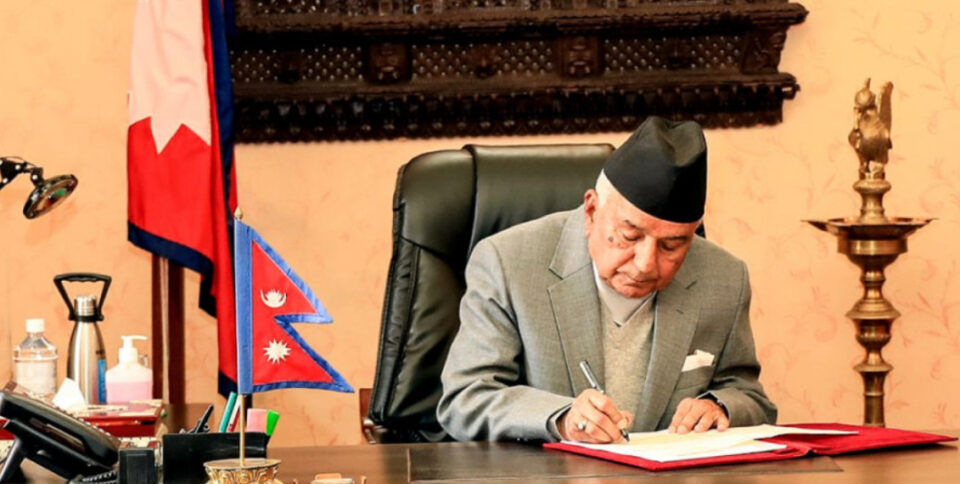
Nepal National Assembly Session: Nepal’s President Ramchandra Paudel on Monday summoned a meeting of the National Assembly on the recommendation of caretaker Prime Minister Sushila Karki, as the Himalayan nation continues to navigate a period of political uncertainty.
The session of the Upper House has been convened in line with Article 93(1) of the Constitution of Nepal, which authorises the President to call parliamentary meetings on the advice of the Council of Ministers.
According to a statement issued by the President’s Office, the National Assembly will meet on Sunday at 11:00 am at the Federal Parliament building in Singhdurbar, Kathmandu.
Backgrounder
Nepal’s Federal Parliament consists of two chambers — the House of Representatives (Lower House) and the National Assembly (Upper House). The National Assembly is a permanent body, with members serving staggered six-year terms, and plays a key role in reviewing legislation, ensuring provincial representation, and providing continuity during political transitions.
Under the Constitution, the President acts largely on the advice of the government, including when summoning or proroguing sessions of Parliament.
Political Context
The upcoming National Assembly session comes against the backdrop of a caretaker government led by Prime Minister Sushila Karki, following recent political developments that have delayed the formation of a full-fledged administration. With Parliament not in regular session for weeks, several legislative and governance matters remain pending.
Political observers say the meeting could be used to address urgent procedural issues, maintain parliamentary continuity, and signal institutional stability at a time when coalition negotiations and leadership questions continue to dominate Nepal’s political landscape.
The session is also seen as constitutionally significant, as the Upper House remains functional even when the Lower House faces dissolution, deadlock, or delays in reconvening.